Last-Minute Holiday Toy Shopping? Here's How to Not Buy the Wrong Thing
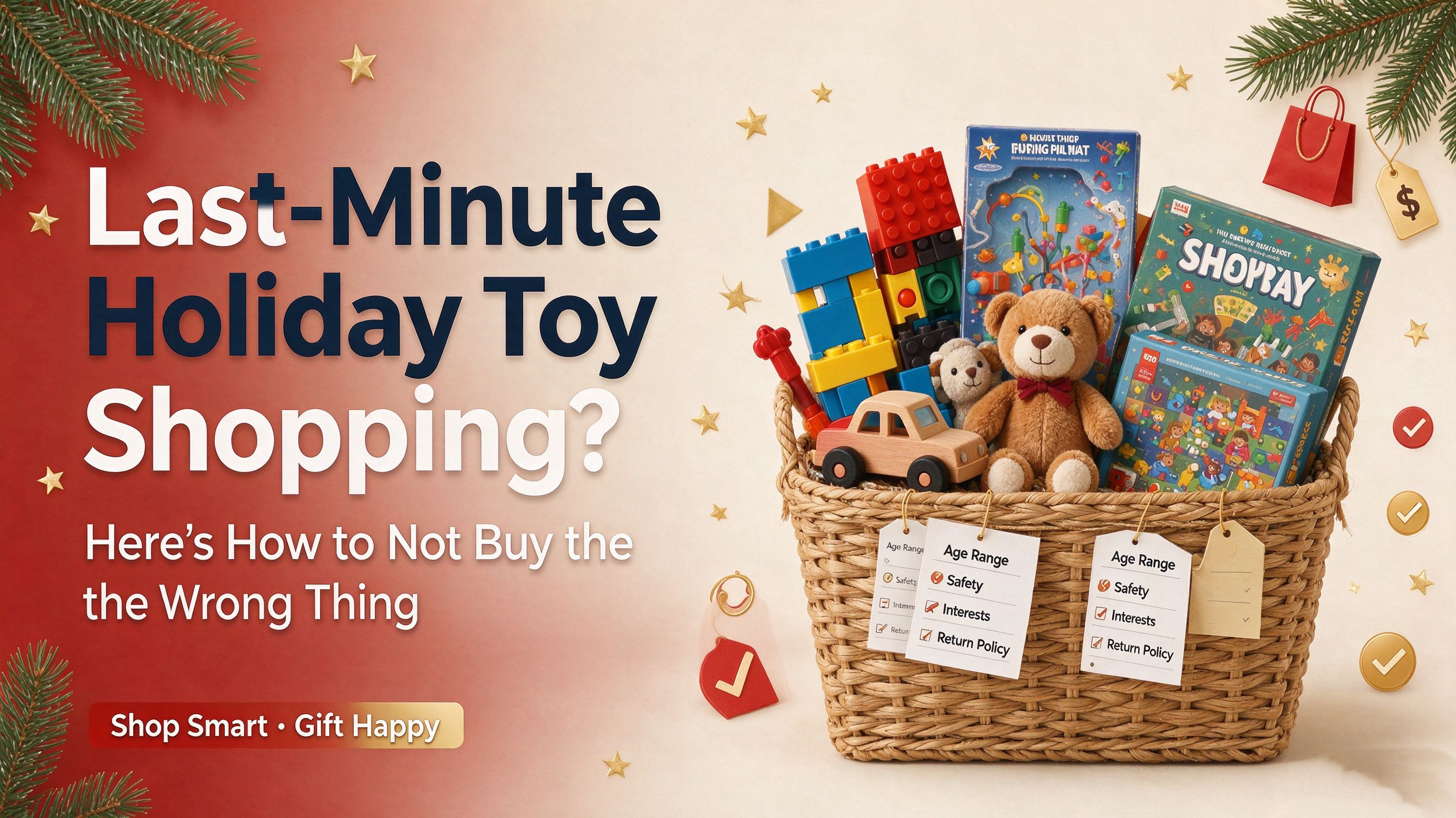
It's late November. Black Friday is behind us, the calendar is thinning out fast, and if you're like most parents, there's still a kid (or three) on your list with nothing under the tree yet.
This is the point in the season where panic shopping kicks in. You grab whatever's left on the shelf, whatever's trending, whatever ships fastest—and three weeks later, you're staring at a toy your child played with exactly twice.
Last-minute shopping doesn't have to mean bad shopping. It just means you need a faster way to decide. Here's how to buy the right thing in the time you have left.
At This Stage, It's Not About the "Hot Toy"—It's About Buying Accurately
We've written before about why open-ended, screen-free toys tend to earn their keep far longer than the flashy single-purpose stuff. That logic doesn't change in December. What changes is your decision window.
So instead of chasing the toy everyone's talking about, focus on three questions:
1. Is it right for this kid's age and stage?
2. Will it still get played with in February?
3. Can it actually arrive before the 25th?
Get those three right and you'll do better than most shoppers who started in October.
Quick Picks by Age (Without Overthinking It)
Ages 1–2: Sensory & Stacking
Look for chunky, safe, no-small-parts toys—stacking cups, soft blocks, sensory boards, simple cause-and-effect toys. At this age, "more" is not better. A few well-made pieces they can grasp, mouth, and knock over will outperform a pile of plastic.
What to avoid: anything with tiny detachable parts, batteries, or an app requirement.
Ages 3–4: Pretend Play & Simple Building
This is the imagination sweet spot. Play food, dress-up pieces, doctor kits, and basic building sets all let them rehearse the world around them. Simple, uniform pieces beat themed kits—the plainer the toy, the more it can become.
What to avoid: toys with only one way to play. They get old fast.
Ages 5–7: Construction & Simple Games
Building sets, magnetic tiles, and rule-light board games hit the mark here. Kids this age want to make things and win things—ideally with someone else in the room. Compact family games are a safe bet and get pulled out again and again.
What to avoid: games with long setups or complicated rules. Nobody reads a 10-page manual on Christmas morning.
Ages 8+: Advanced Builds, Strategy & Making
Older kids often get the least thoughtful gifts because "they're too old for toys." Not true—they just need more challenge. Look for advanced construction sets, strategy games, and creative/making materials. These are the gifts that survive past New Year's.
What to avoid: assuming they've outgrown play. They haven't. They've outgrown simple play.
The Last-Minute Avoidance Checklist
Before you hit checkout, run through this:
• Skip anything that needs an app, account, or Wi-Fi. The toy should work out of the box on Christmas morning—not after a 40-minute setup.
• Check the age label and safety. Especially with younger kids: small parts, choking hazards, and battery compartments matter.
• Confirm stock and shipping cutoff. Most carriers publish their "order by" dates for pre-Christmas delivery. Don't assume—check.
• Ignore the "hot toy" hype. The toy with the biggest ad budget is rarely the one that lasts.
• Buy fewer, better. One great toy your kid actually plays with beats five that end up in the donation bin by spring.
A Final Word
The best holiday gifts aren't the ones that made the most noise in the ads. They're the ones that let a kid make something—a world, a story, a mess, a memory.
You still have time. Shop a little more deliberately, skip the panic buys, and you'll come out ahead.
— The Kibtoy Team
Still shopping? Explore Kibtoy's holiday gift collection—curated by age, built to last, and ready to ship before the 25th.